
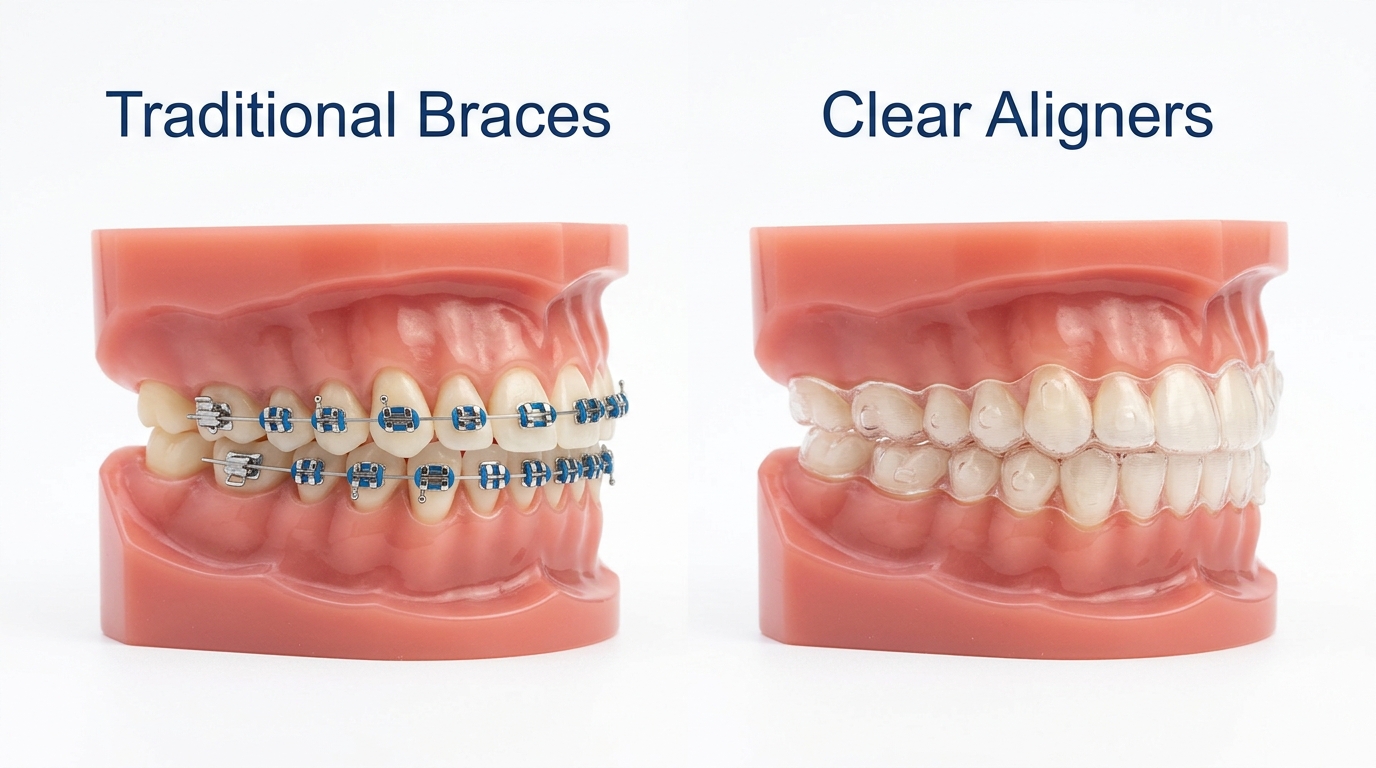
If you’re looking to straighten your teeth, you may be wondering whether braces or clear aligners are the better option. Both can help improve the alignment of your teeth, but they work differently and come with their own advantages and limitations.
Traditional braces are fixed to your teeth, while clear aligners are removable and much less noticeable. This can make a difference in how you eat, clean your teeth, and manage treatment day to day. But appearance and convenience aren’t the only things to consider. The condition of your teeth, the type of correction you need, your budget, and how well you can follow the treatment plan all matter.
So, when it comes to braces vs clear aligners, which option should you choose? The answer depends on what your teeth need and what works best for your daily routine.
Braces vs Clear Aligners: How Do They Work?
Both braces and clear aligners work by applying gentle, controlled pressure to your teeth and gradually moving them into better positions. The main difference is how they do it.
Traditional braces use brackets attached to your teeth connected with wires, which your orthodontist adjusts during regular visits. Since braces are fixed, you cannot remove them yourself.
Clear aligners are custom-made, transparent trays that fit over your teeth. You wear a series of aligners that you can remove when eating, brushing, and flossing, but they require consistent daily wear to be effective.
Braces vs Invisalign: What's the Difference?
Invisalign is a specific brand of clear aligners, while clear aligners are a broader term for this type of treatment. So, a Braces vs Invisalign comparison is essentially a comparison between traditional braces and one particular clear-aligner system.
Clear Aligners: Benefits and Disadvantages
Clear aligners are a popular option for people who want to straighten their teeth without visible brackets and wires:
- Benefits: Less noticeable discreet appearance, removable while eating and brushing, no food restrictions, easier oral hygiene, and highly convenient for working adults.
- Disadvantages: Require 20-22 hours of daily wear consistency, easy to misplace or lose, require frequent cleaning, and may not be suitable for severe complex bite corrections.
Traditional Braces: Benefits and Disadvantages
Traditional braces remain a gold standard because they stay fixed to your teeth and can handle complex orthodontic movements:
- Benefits: Suitable for almost all orthodontic cases (severe crowding, spacing, bite issues), always in place working 24/7 without compliance worries, and allow controlled precision movements.
- Disadvantages: More noticeable metal/ceramic appearance, extra care needed when brushing around brackets, restrictions on hard or sticky foods, and temporary soreness after adjustments.
Braces vs Aligners for Teeth Straightening: Which Is Better?
Each option has unique trade-offs based on key lifestyle factors:
• Appearance: Clear aligners are transparent and nearly invisible, appealing to adults conscious of aesthetic appearance.
• Eating & Oral Hygiene: Aligners are removed during meals allowing unrestricted eating and simple brushing/flossing. Braces require dietary precautions to protect brackets.
• Comfort & Convenience: Aligners eliminate bracket irritation but require strict discipline to put back in after meals. Braces are fixed, requiring no daily compliance.
• Treatment Suitability: Braces excel at severe bite corrections and complex tooth rotation, while aligners treat mild to moderate spacing and crowding effectively.
Invisible Braces vs Clear Aligners
The term 'invisible braces' often refers to lingual braces placed behind the teeth. Clear aligners are removable trays fitting over the teeth. Though both are discreet, they utilize different mechanics and are not interchangeable.
Clear Aligners vs Braces Cost & Treatment Time
Total cost and treatment duration depend on case complexity, aligner count or braces type, length of treatment, and retainer aftercare.
Consistent aligner wear ensures predictable treatment times, while braces treatment time depends on attending scheduled adjustment appointments and keeping brackets intact.
Braces and Clear Aligners in Bilekahalli at Dentacare
At Dentacare Dental Clinic near Bannerghatta Road, Bilekahalli, Bengaluru, our specialist orthodontic team evaluates your bite and smile goals to recommend whether traditional braces or clear aligners provide the safest, fastest, and most aesthetic result for you.
Frequently Asked Questions
Are clear aligners better than braces?
Neither is universally better. The right choice depends on your specific orthodontic needs, lifestyle, budget, and ability to follow a daily 20-22 hour wear schedule.
Are braces or clear aligners faster?
Treatment time depends on case complexity and patient compliance. Mild alignment issues with clear aligners can be fast, while complex bite shifts may be faster with fixed braces.
Are clear aligners more expensive than traditional braces?
Cost varies based on duration, aligner system, and severity. Your orthodontist will provide an exact quote after a digital scan and clinical evaluation.
Can clear aligners fix the same problems as braces?
Clear aligners treat most mild to moderate crowding, spacing, and minor bite issues, but severe skeletal bite discrepancies or severe rotations usually benefit more from traditional braces.
Are clear aligners good for adults?
Yes! Clear aligners are an exceptionally popular, discreet, and flexible option for adults looking to straighten their teeth without visible metal wires.
Are clear aligners easier to clean than braces?
Yes. Aligners are removed before brushing and flossing, allowing you to clean your natural teeth without navigating around fixed brackets and wires.
How do I choose between braces and clear aligners?
Schedule an orthodontic consultation at Dentacare. An orthodontist will evaluate your bite, discuss your daily routine and budget, and recommend the best treatment option.